
THE GODDESS IN OUR LAND
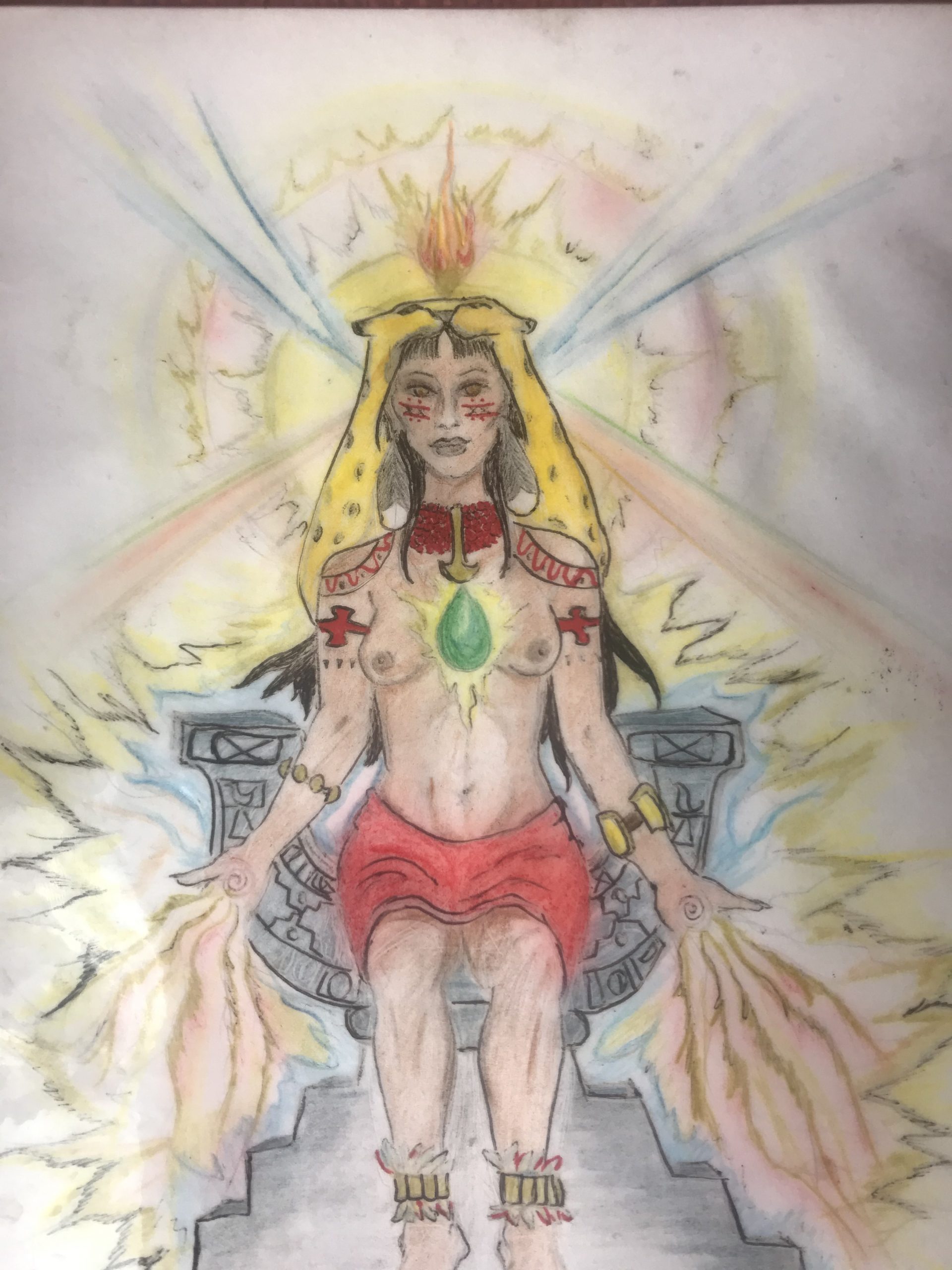
In our country, there are powerful energies of the Divine Feminine that guard natural landscapes and hold regency over certain realms of human, plant, and animal life. Although not all are recognized as Goddesses by indigenous peoples, their attributes and energy connect us to the manifestations of the Great Cosmic Mother.
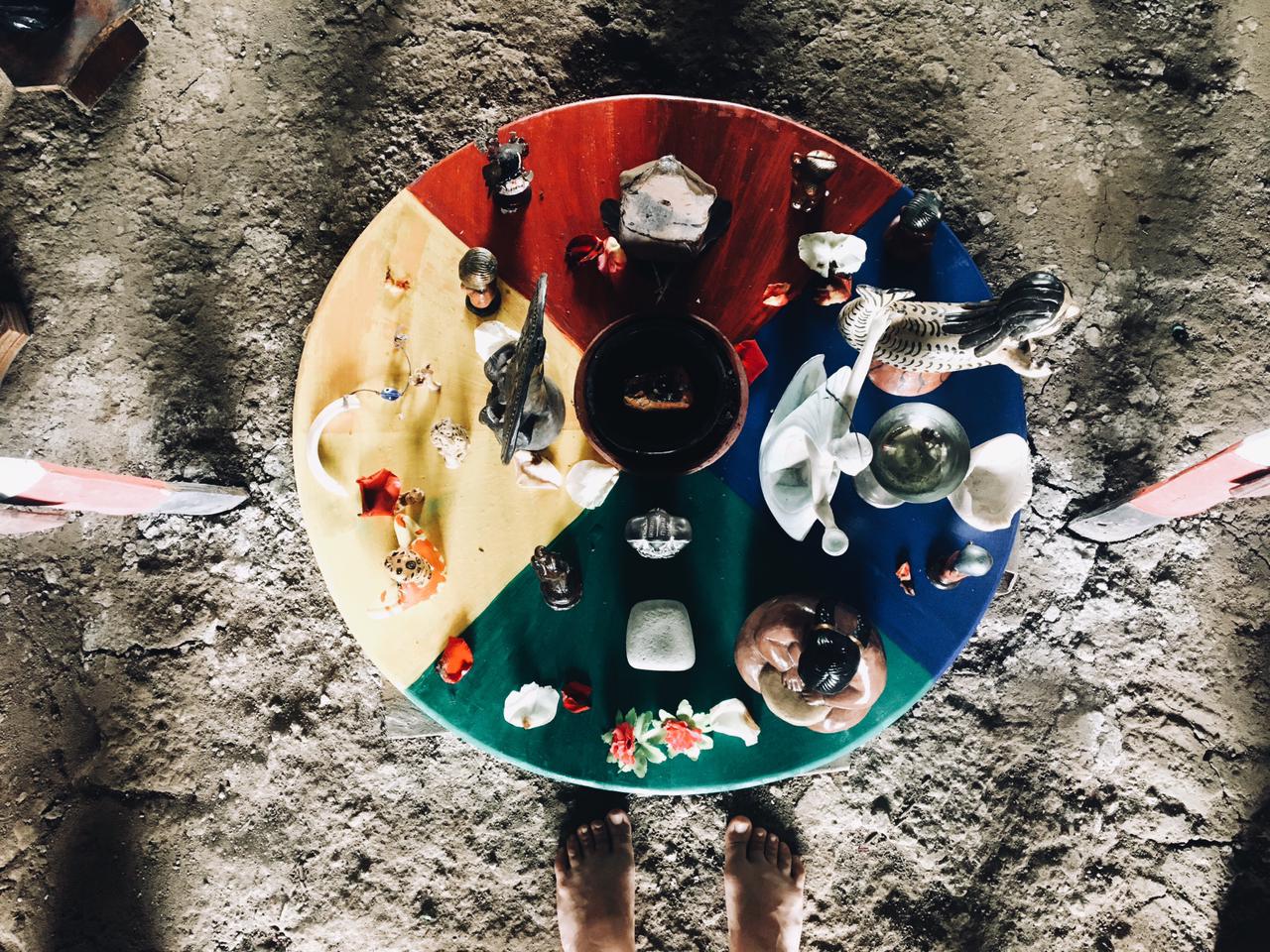
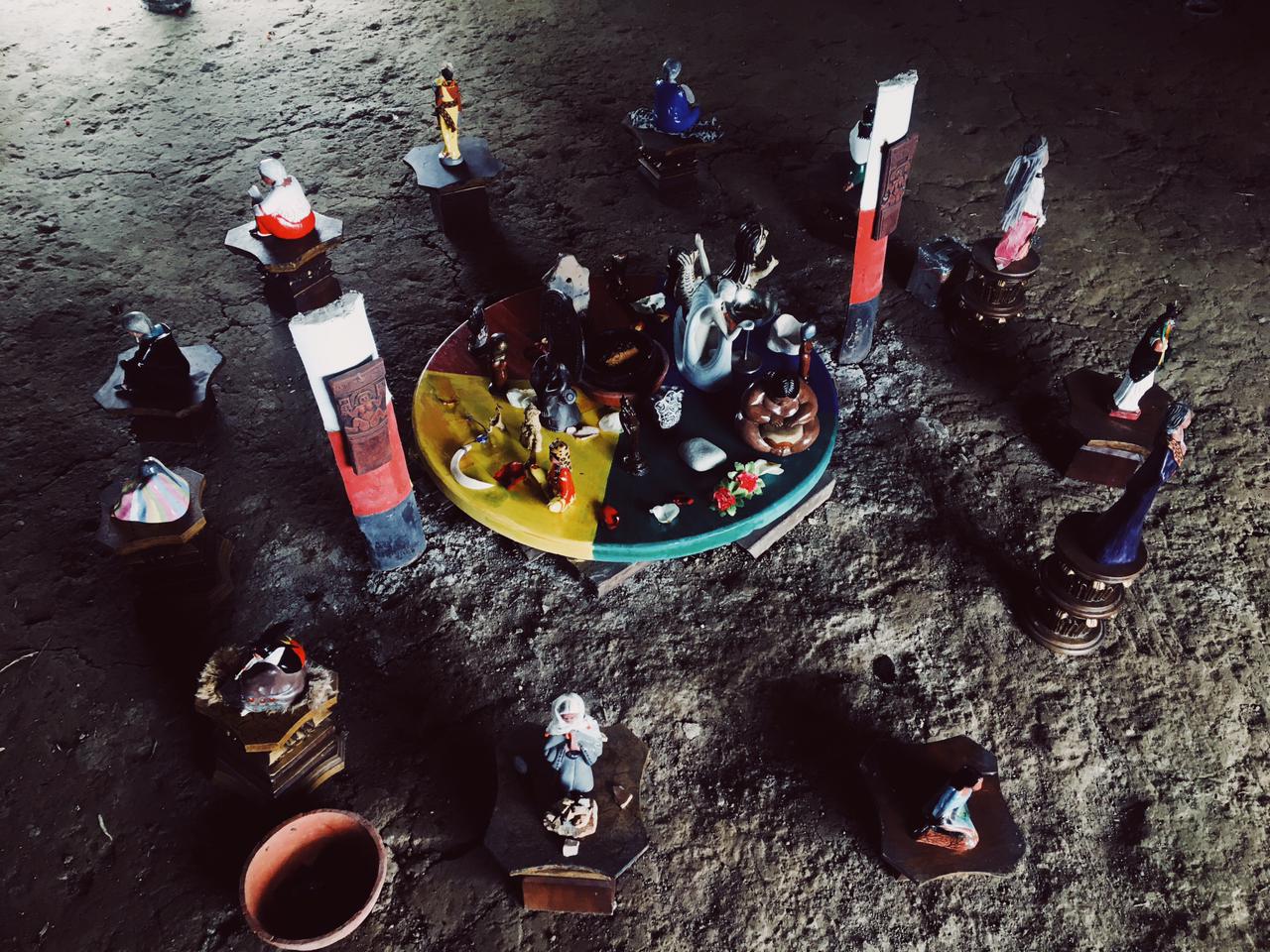
The work of those of us who form the temple is to activate the energies of these deities through our ceremonies, offerings, devotional processes, and invocation. We work with a Medicine Wheel established according to our geography (as a country), and we invoke the different aspects of the Goddess who manifests in nature in a specific way according to the pacha (time/space) we are transitioning through: Sisa pacha (Ñusta or Maiden) / Rupay pacha (Jaguar Woman) / Tarpuy pacha (Mother) / Tamia pacha (Ñawpa or Crone)."

Why Paqarina?
Those of us who live in the Andean region have heard the word Paqarina at some point, yet we do not always know its meaning.
For the ancient cultures that developed in the Andes, the Paqarina is a term that designates the mythical space where creation is gestated, and from where the civilizing ancestors originate. It is a sacred space from which kausay—or vital energy—emanates, and where peoples can communicate with their ancestors, receive visions, seek healing, undergo initiation, or discover the entrances to other worlds where the power allies of the yagcha dwell.
Paqarinas refer us back to the sacred womb of the Great Mother, represented by lagoons, oceans, springs, and caverns. These are typically the primary sites honored as Paqarinas.
In the Temple of the Goddess, we feel that this is the name with which we must bring the Mother Goddess back to this territory. We recognize that her presence transforms as the four Pachas—or cycles of time recognized by our ancestors—succeed one another:
Sisa Pacha – Time of Flowering – Ñusta Paqarina.
Rupay Pacha – Time of Heat and Drought – Quilago Paqarina.
Tarpuy pacha – Time of Sowing – Mama Paqarina.
Tamia pacha – Time of Rain – Ñaupa Paqarina.
Ñusta Paqarina
The Ñusta Paqarina is the guardian of the seeds. She is eternally young and ancient at the same time. She is the perpetual greenery of our territory that is never conquered by winter. In the northern and southern hemispheres of the planet, we can see how the earth transforms, losing its colors and vitality; meanwhile, in the center of the world, the climate allows the face of the Goddess to be that of a maiden—a sacred Ñusta who celebrates the heartbeat of life and displays her flowers and fruits. The seeds she guards do not belong exclusively to the plant world; they are the seeds that all beings possess. Within the constitution of every living being lie the imprints of the Divine Source, which we equate with seeds. These seeds hold our highest talents and abilities. They are activated when we enter into deep contact with the subtle energies of nature. The Ñusta is the guardian of every seed and its harmonious unfolding. In myths, she appears as the Ñusta Paqarina, the protagonist of the Yamor myth. Under the guidance of Apu Taita Imbabura, she embarks on a sacred journey to the four directions in search of the seven grains that will give life to a love potion: the Chicha del Yamor. This potion is a symbol of union with the territory, of community, and of gratitude.
Quilago Paqarina
The Chachi and Cayapa peoples tell that the primordial grandparents, A-Rucu and Ca-Chimbu, were born from the depths of the ocean while the Sun and the Moon embraced in the sky. Upon emerging from the waters, they encountered a Jaguar (male or female) that guided them from the sea to the high mountains. In some versions, the jaguar is masculine, and in others, feminine; however, it is always connected to authority, the defense of territory, and the possibility of finding the auspicious place where a people can rise.
In our connection with the land, we recognize this primordial feline figure as the mythological precedent for the lineages of Queen-Priestesses who held the title of Quilago. Beyond the research and myths surrounding the figure of the Quilago, we consider that this group of women were mediators between the spiritual realm and the physical plane. They embodied the mysterious strength of the Quela Nu, the primordial Jaguar Woman of the Spiritual Realm, whom we consider the Guide who leads us toward our destiny. If we have germinated our seeds, her figure leads us through the paths and challenges that bring us to the place of our flowering.
Mama Paqarina
From the depths of the Busa Lagoon, the Cañari people tell that the Great Mother Serpent rose and shaped the territory. The Cañari identity recognizes the Great Serpent as its Mother and the Busa Lagoon as the Paqarina where she dwells.
In the Temple of the Goddess, we recognize Mama Paqarina as "She who possesses the serpentine energy of creation." We honor the vital energy that links us to all things through the web that is her womb and which we experience as "reality."
As such, Mama Paqarina does not appear in any single myth; however, we recognize that the Great Primordial Serpents—which have portrayed the feminine principle for millennia—are the representatives of this Face in our territory. We recognize in the Cañari myth the purest and most atavistic expression of this generative power.
Ñaupa Paqarina / Ñawpa Paqarina
The Ñawpa Paqarina is perhaps the most enigmatic figure we connect with in the Temple.
She is connected to the Waters of the sky, but also to the lightning. Like the Mama Paqarina, she is linked to the serpent. In some Andean myths, it is said that the Yacumama (Mother of the Waters) and the Sachamama (Mother of the Forests)—the primordial serpents—emerge from the inner world, known as Uku Pacha. The Sachamama becomes the forests and the Cosmic Tree that connects the three levels of the Cosmos, while the Yacumama transforms into the rivers that furrow the earth and then ascends to the heights, where she transforms into lightning.
The Ñawpa Paqarina is the aspect of the Great Mother that is primordial; she is not merely "ancient." She unites the end with the beginning. She is the wisdom of the past that places itself in front of us to guide the present. She holds lightning as a staff to open the way and transform everything. She is the sower of the seeds and the one who can awaken them. Her face is difficult to reveal, as it hides within the heavy clouds that announce the storm. Her presence can be felt in the strike of the lightning, and her voice in the tempest.
She invites us to return to the darkness, to the depths of the earth when the chacra (garden) has tall grass from the rains and has not yet been weeded. She is the force of the "ancient" that rains down upon us toward germination.
Connect with us
If you feel the call, you can write to us here to receive more information and open a space for dialogue.
Find us on social media or send us an message: